Bingo Winning Patterns Philippines: Know the Target Before You Play
Game Overview
Understanding bingo winning patterns philippines players encounter starts with one question: what arrangement wins this particular round? A completed row can qualify in one game and mean nothing in another. Before buying a card, check the displayed target, whether the centre counts automatically, and how a winning claim is recorded. Those details matter more than choosing a card that feels lucky.
Bingo is a chance game. Recognising patterns helps you follow the action and avoid mistakes; it does not make your numbers more likely to appear. The useful player strategy is to choose a format you understand, keep the cost manageable, and know exactly what must happen for a prize.
Match the Pattern to the Format
In familiar 75-ball bingo, a card uses a five-by-five grid, often with a free centre square. Winning targets can include lines, corners, letters, or a full card. In 90-ball bingo, tickets commonly use three rows and nine columns with numbered spaces and blanks. Games often award prizes for one line, two lines, and a full house. Always follow the individual room's rules.
A themed bingo game may use another layout entirely. Do not apply a five-by-five pattern to a ticket with a different structure. Use the lobby preview or help screen to identify the card format before entering a paid round. For a broader introduction, see how to play bingo.
When a Round Is Worth Joining
Join when you have enough time to read the rules and follow the full round. A short countdown is a reason to wait for the next game if the target remains unclear. Check whether the game has several prize stages: an early line prize and a later full-card prize may have different conditions.
- Identify the exact winning arrangement before purchasing a card.
- Check the card price and total cost of your selection.
- Confirm whether marking and prize claims happen automatically.
- Read how simultaneous winners share the advertised prize.
RTP + Volatility
Why Bingo Does Not Have One Universal RTP
Return to player, or RTP, describes the proportion of stakes returned as prizes over an appropriate long-run calculation. There is no single RTP that applies to every bingo game. A multiplayer room with a shared prize pool works differently from an electronic bingo-style game with a published mathematical return.
For a pool-based game, inspect ticket sales rules, the prize allocation, and any stated deductions. A guaranteed prize or promotional contribution can change the relationship between ticket revenue and payouts. For an electronic title, check its help page for a published RTP and the version to which it applies. Read understanding bingo RTP before comparing unlike formats.
RTP is not a promise about your next session. A published percentage does not mean you receive that percentage of each purchase back, and a short run of losses does not make a win due. Avoid treating a room's recent winners list as a forecast.
How Prize Structure Changes the Experience
Volatility concerns how uneven results can be. A game with several smaller prize stages can feel different from one centred on a single large award. The exact experience depends on the winning conditions, prize distribution, competing entries, and tie rules. Without a published measure, do not assume a room has low volatility simply because tickets are inexpensive.
A larger headline prize is only one part of the comparison. Ask how many prizes are available, whether the amount is shared, and what the full entry costs. A jackpot may also require completing a pattern within a call limit. Read bingo jackpot rules to understand why completing the card may not qualify for the headline award.
Symbol Guide
Traditional bingo uses numbers and card positions rather than slot-style paying symbols. The important visual signals are the target overlay, marked spaces, any free square, and the called-number display. A decorative star or highlighted border only matters if the rules assign it a function.
Recognising Common Winning Patterns
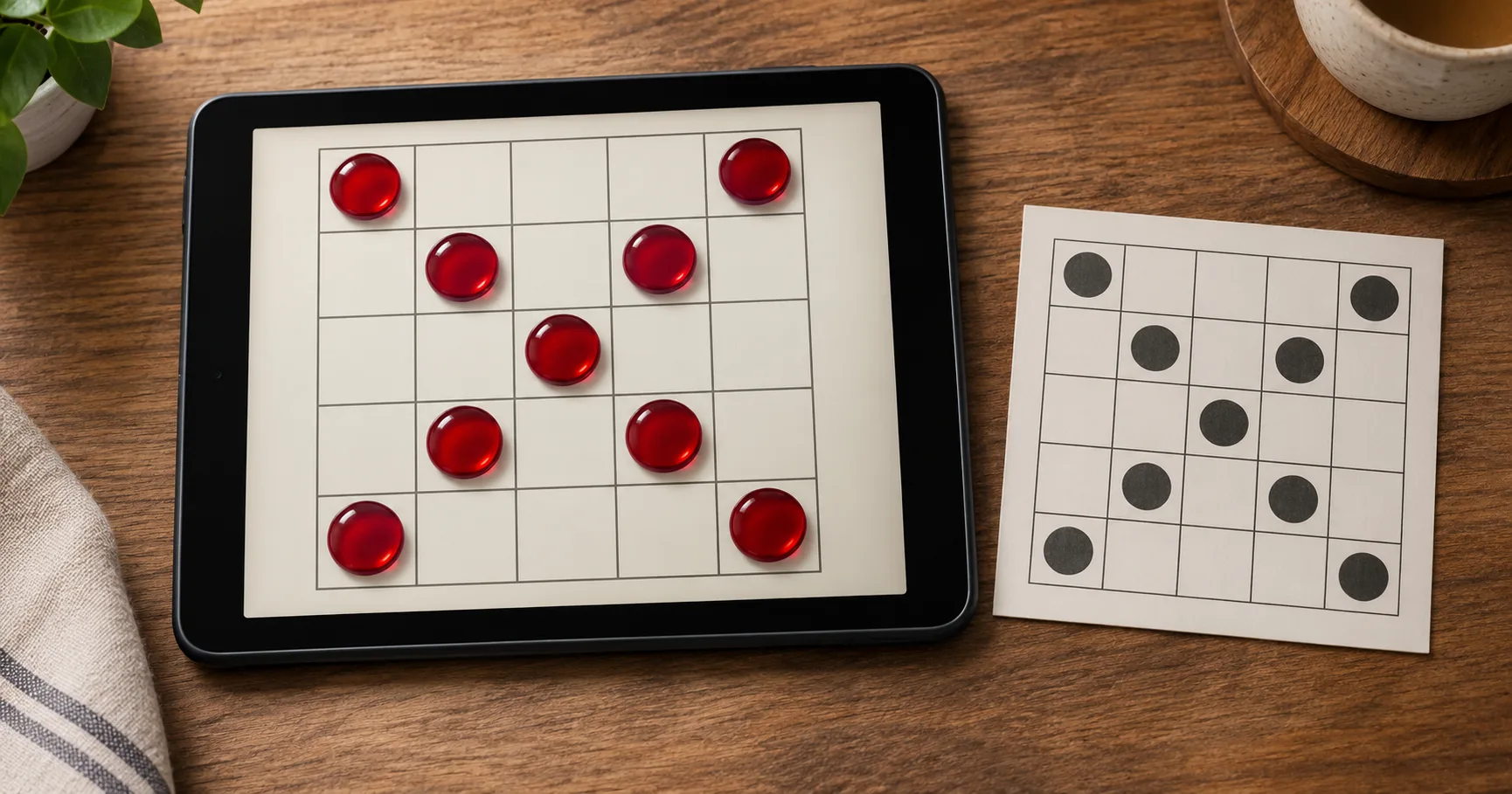
- Straight line: a complete horizontal, vertical, or diagonal line where that direction is permitted.
- Four corners: the four outside corner squares on the relevant card layout.
- X pattern: both diagonals completed across a square card.
- Letter pattern: designated positions forming a shape such as T or L.
- Coverall or blackout: every required space on the card completed.
These names are a starting point, not a substitute for the displayed diagram. A line game may accept horizontal rows only. A letter pattern may allow rotation, or it may require one fixed orientation. Compare the highlighted cells individually, especially when two shapes look similar. Explore common bingo card patterns for more pattern-reading practice.
Read the Free Space and Target Together
A free centre generally counts as already covered when the game includes one. It contributes only when the winning pattern passes through that square. It does not replace a missing corner or another required position. On a ticket with blank spaces, those blanks are not automatically equivalent to a free centre.
Use the target overlay to separate required spaces from irrelevant ones. A card can have many marked numbers and still lack the exact arrangement needed. Likewise, being one square away has no special effect on the next call. The game follows its draw rules, regardless of how close your card looks.
Strategy Tips
Practise Recognition Before Spending
If a free demonstration is available, use it to rehearse identifying the target and following calls. The purpose is familiarity with the interface and claim process. A successful practice round does not predict paid results. Start with bingo practice guide if letter shapes or multiple prize stages are unfamiliar.
Manual marking requires attention, so choose a manageable pace and card count. Automatic marking can reduce missed marks, but it does not improve the underlying draw chances of a particular card. Check whether automatic marking also includes automatic claims; those are separate functions.
Set a Session Limit Before Buying Cards
Choose an entertainment amount you can afford to lose, then decide how much of it each round may use. For example, a PHP 200 session limit divided into ten equal portions gives PHP 20 per round. If your intended card selection exceeds that amount, reduce the selection or skip the round. This is a spending illustration, not a suggested deposit.
Buying more cards increases your total stake. It may increase your representation in a round, but it does not create a guaranteed profit. Keep the session limit fixed even after a near miss. The guide to setting a bingo budget explains how to track entries across consecutive games.
- Set a spending limit and a finishing time before opening the lobby.
- Review the next round's target, ticket cost, and prize-sharing rules.
- Buy only the selection that fits your planned round allowance.
- Stop when either limit is reached, without adding recovery money.
Recommended Platforms
Choose a platform by what you can verify before paying. Prioritise a readable pattern display, accessible game rules, clear ticket pricing, and an understandable claim process. A familiar payment option or colourful lobby does not establish that a particular bingo room suits your needs.
Before registering, look for the operator's registered company name, eligibility conditions, and account verification requirements. Before depositing, check withdrawal conditions and available spending controls. If a promotion interests you, read its wagering requirement, expiry, game exclusions, and any withdrawal restrictions. Use bingo platform comparison to organise those checks.
A practical recommendation starts with the exact game: can you see its target, understand its prize rules, and keep its ticket cost within your limit? If any answer is unclear, wait before paying. Play only if you meet the applicable age and eligibility requirements, and step away if gambling becomes a way to chase losses.