Fishing Game Bankroll Limits When Rain Disrupts a Philippine Session
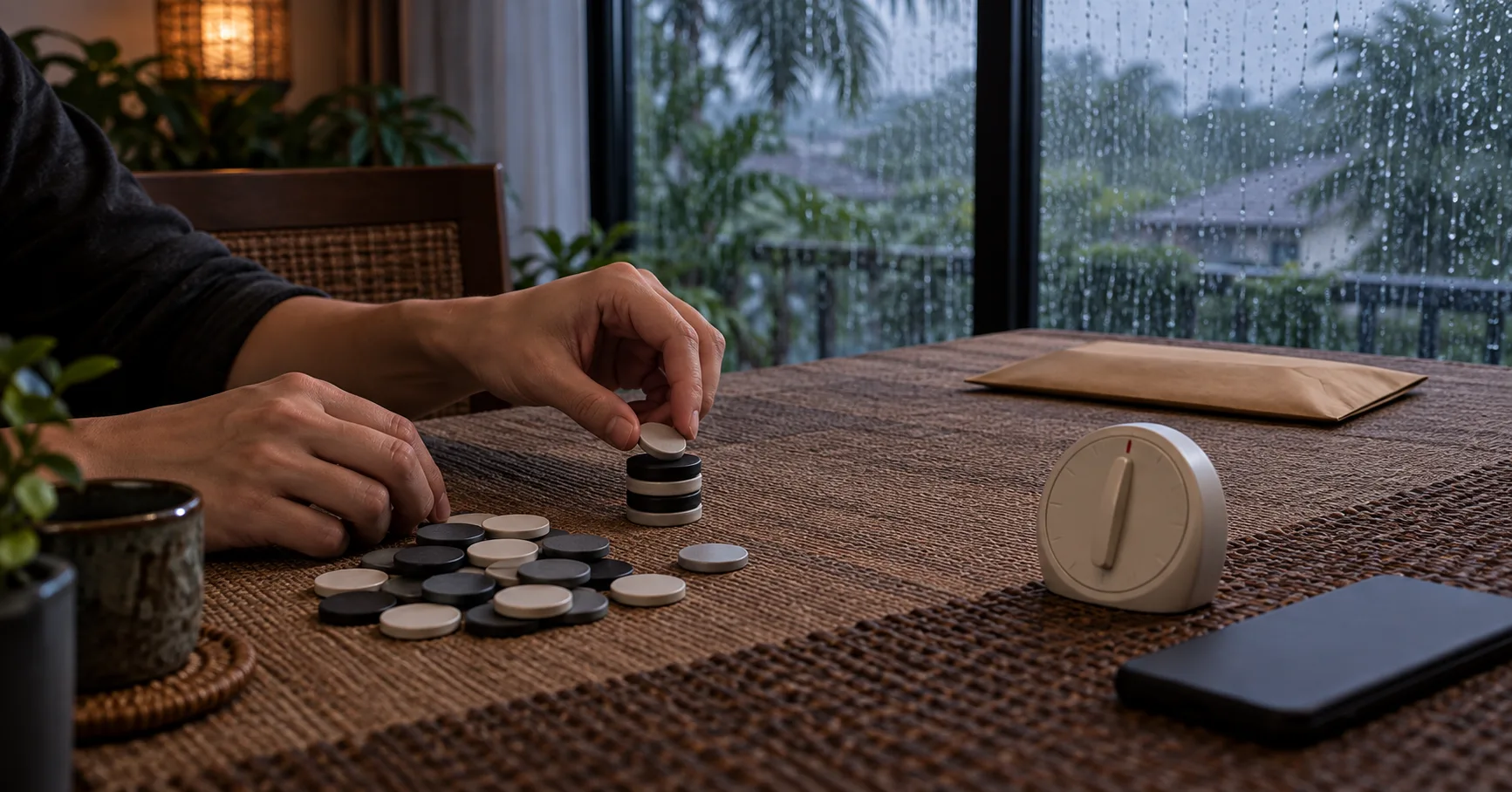
The first consequence a local player may notice is uncertainty around the next cash-in, not any change to the game’s payout mathematics. When heavy rain affects travel or mobile reception, relying on an afternoon reload can turn a planned Fishing Game session into an improvised one.
Thursday’s downpour turns liquidity into session risk
EVENT — On September 17, 2026, Inquirer News reported that Heavy rains to prevail over Metro Manila, Luzon areas Thursday afternoon. The supplied advisory concerns Metro Manila and parts of Luzon, without establishing that every payment channel, mobile network, or household connection will be disrupted.
IMPACT — A player using prepaid mobile data, an e-wallet that still needs funding, or a nearby payment centre may have fewer convenient recovery options during a downpour. That possibility does not alter game rules or probabilities. It changes the practical risk of treating an immediate cash-in, reconnection, or balance check as guaranteed.
READER ACTION — Fund only the amount already approved for entertainment, confirm that the balance has settled, and avoid beginning a paid round while a transaction remains ambiguous. If the signal weakens, pause before another input rather than assuming the previous one failed.
As of September 17, 2026: this weather context may have changed after September 24, so check present local conditions before acting.
Exposure depends on how you fund and connect
The players most affected are not simply those living where rain falls. Exposure is higher for anyone who must leave home to reach a payment centre, depends on prepaid data, or expects to move money from a household e-wallet during play. An experienced player should treat those dependencies as constraints established before the session.
A player with stable home internet and a fully settled entertainment balance faces less weather-related friction. The same bankroll discipline still applies, but there is no reason to shrink a session solely because rain appears outside. What matters is whether the weather can interrupt funding, communication, or accurate observation of completed actions.
Reduce or postpone the session if reaching a payment centre would require unnecessary travel through worsening local conditions.
Use a smaller cap when prepaid data is limited and a dropped connection would make completed actions difficult to verify.
Keep the normal cap when funds are settled, connectivity is stable, and the money is already disposable entertainment spending.
Skip the session when its budget competes with transport, food, bills, school costs, or approaching Christmas-season commitments.
Ring-fence pesos before calculating firepower
A bankroll is not the number displayed in an e-wallet or account. It is the portion of disposable entertainment money deliberately exposed to the session. That distinction matters during the Philippine “-ber months,” when gift, travel, and family expenses can make an apparently comfortable balance misleading.
Start with a monthly entertainment allowance, then assign only part of it to one sitting. Suppose PHP 3,000 remains after necessities and savings, and you permit one-third for Fishing Game play. The session ceiling is PHP 1,000. The other PHP 2,000 is outside the decision, even if it remains instantly accessible in the same e-wallet.
Promotional value requires separate treatment. Free Credits may have restrictions that prevent them from functioning like withdrawable cash, while a Bonus may carry conditions that change how its displayed balance can be used. Without verified terms, neither should enlarge the cash amount you are prepared to lose.
Identify money left after essential expenses, savings commitments, debt payments, and near-term family obligations have been covered.
Choose a session cap that would not require replacement from another category if the entire amount were lost.
Separate settled cash from promotional balances until you have read the applicable eligibility, expiry, and wagering conditions.
Remove convenient reload routes where practical, because an accessible e-wallet balance can blur a previously firm boundary.
Record the cap before opening the game, using a private note that remains visible throughout the planned session.
Define the chargeable action before dividing the pot
In a Fishing Game, the useful unit may not match a nominal round. Cost can accumulate through individual shots, short bursts, repeated targets, or other paid inputs. The experienced-player mistake is to budget for screen events while ignoring how many chargeable decisions occur inside them.
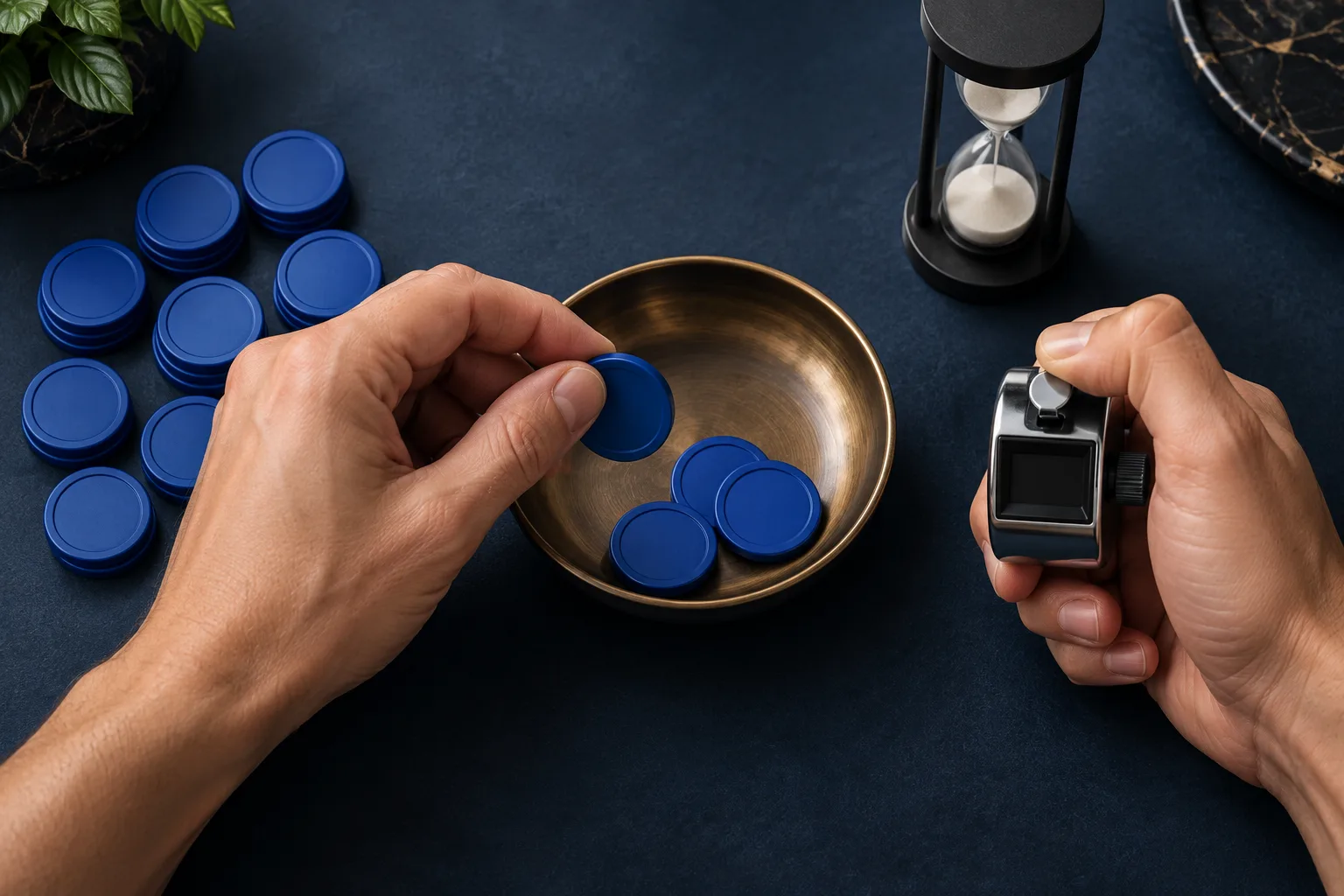
Choose a repeatable action unit that can be observed without guessing. It might be one paid shot, one fixed burst, or one short attack sequence using an unchanged setting. Then estimate how many such units the planned session can contain. Per-unit stake equals the playable session amount divided by the intended number of units.
For example, take a hypothetical PHP 1,000 session and reserve PHP 200 as an untouched buffer. Dividing the remaining PHP 800 across 80 planned action units gives PHP 10 per unit. If one burst consumes four units, that burst carries PHP 40 of exposure rather than the visually smaller PHP 10 setting.
Select one chargeable action that can be counted consistently even when targets, animations, or screen activity become busy.
Subtract any untouched buffer from the session cap before calculating how much is genuinely available for active play.
Estimate a realistic number of chargeable actions from the intended session length and your usual input pace.
Divide playable pesos by planned actions, then reduce the result if the available setting would exceed that amount.
Recalculate only between sessions, because changing the denominator during play can disguise chasing as a technical adjustment.
Two hypothetical ledgers in pesos
A controlled PHP 500 mobile session
Say a player approves PHP 500, keeps PHP 100 untouched, and plans 40 equal-cost actions. The playable amount is PHP 400, producing a PHP 10 action stake. A loss stop of PHP 250 would end paid play with at least PHP 250 of the original cap unspent, regardless of whether time remains.
If the connection becomes unstable after PHP 170 of confirmed spending, the player should not assume the unobserved balance. The correct response is to stop inputs, restore a reliable connection, and reconcile completed activity. The stop is operational, even though the financial loss limit has not been reached.
A slower PHP 1,500 home session
Now suppose another player assigns PHP 1,500, places PHP 300 outside active play, and expects 60 counted bursts. The working pot is PHP 1,200, so the planned exposure is PHP 20 per burst. If each burst actually contains several separately charged inputs, those inputs must total PHP 20 rather than each taking PHP 20.
This session could use a PHP 450 loss stop and a 50-minute time stop as hypothetical limits. A rise to PHP 1,750 does not justify raising either one. If the balance later falls to PHP 1,300, the original limits still govern; temporary gains did not create permission for a longer session.
Make the stop rule survive a winning streak
A useful stop rule answers more than “How much can I lose?” It defines the financial, time, technical, and behavioural conditions that close the session. Each condition operates independently, so reaching any one of them ends paid inputs.
The loss stop should be smaller than or equal to the session cap. A high-water rule can protect part of an unusually strong result, but it must be written in advance. Otherwise, every new peak invites another improvised threshold and converts a safeguard into permission to continue.
Stop when the predetermined peso loss is reached, even if a promising target remains visible or the session feels unfinished.
Stop when the timer expires, because slower spending can still become an unplanned extension of attention and exposure.
Stop after a defined retreat from the session’s highest confirmed balance, using a threshold chosen before play begins.
Stop immediately when the connection, balance, or outcome of a paid action cannot be confirmed with reasonable confidence.
Stop when irritation, rapid stake changes, or an urge to recover losses replaces the calculation written before play.
For the PHP 500 example, a complete instruction might read: stop at a PHP 250 loss, after 35 minutes, or upon one unresolved paid action, whichever happens first. This is a hypothetical model, not an operator term. Its strength comes from leaving little room for negotiation during play.
Treat interrupted payment and play states as unresolved
Rain does not prove that an e-wallet, payment centre, or network has failed. It does make a contingency worth preparing. If a cash-in appears delayed, do not submit another merely to test the first. Duplicate attempts can enlarge the bankroll beyond the approved cap if both later settle.
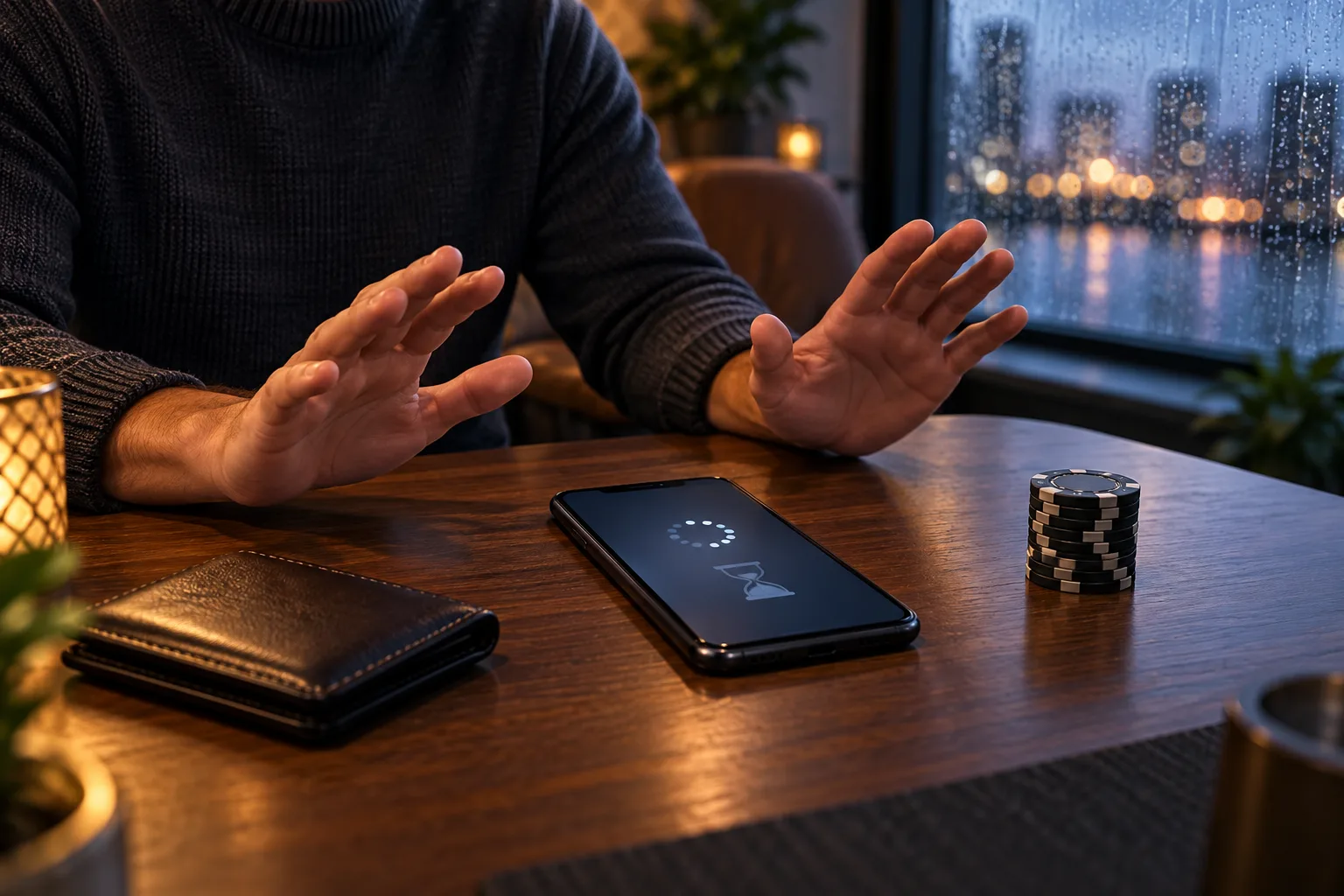
The same logic applies inside the game. Repeated tapping during a frozen or loading state may queue actions, depending on how a system behaves. Without platform-specific evidence, the safe assumption is uncertainty. Pause, capture the visible state if appropriate, and reconcile the transaction or play history before continuing.
Stop all paid inputs as soon as a cash-in, balance update, or game action becomes uncertain.
Preserve the available reference details or screen state without exposing passwords, codes, or other sensitive account information.
Wait for a stable connection before checking whether the payment or action was completed, rejected, or remains pending.
Resume only when the settled balance fits the original cap and every disputed action has a clear recorded outcome.
Close the ledger while memory is fresh
After the session, compare planned actions with actual charged actions, total confirmed spending, duration, and the reason play stopped. The purpose is not to judge whether the result was lucky. It is to learn whether the chosen action unit and pace estimate described the session accurately.
If PHP 800 was meant to cover 80 units but lasted only 50, the next adjustment is not automatically a larger bankroll. The better choices are a lower unit cost, fewer multi-input bursts, or a shorter session. Budget discipline improves when the model changes before the next deposit rather than during the current game.
The practical rule is simple: approve the pesos, define the chargeable unit, and write independent stop conditions before play. Rainy-day friction only makes that preparation more valuable. A Fishing Game session should finish because a prewritten boundary was reached, not because every accessible peso disappeared.