How to Pick Keno Numbers: Choices That Actually Matter
Game Overview
Learning how to pick keno numbers starts with separating personal preference from probability. In a fair random draw, a neat pattern, scattered selections and a birthday combination have the same chance of matching when they contain the same number of picks. Your useful decisions are how many spots to select, which payout table to accept and how much you can afford to spend.
Keno suits players who enjoy choosing a ticket and waiting for a result. It does not offer a skill advantage from spotting patterns in previous draws. Play only when the stake is affordable entertainment spending and you are comfortable losing it. If you need a predictable return or money for an upcoming expense, skip the session.
How a Keno Round Works
You select numbers from a pool, place a stake and receive a result based on how many selected numbers match the draw. A common format draws 20 numbers from a pool of 80, but check the rules of the exact game. The allowed selection sizes and qualifying match counts can differ.
Your selection size is often called your spot count. A five-spot ticket means you selected five numbers; it does not mean you need five matches for every possible payout. The payout table explains which results qualify. Before confirming a ticket, check whether the displayed stake applies to one round or several scheduled draws.
For your first session, use keno rules for beginners to become comfortable with the ticket layout. Then choose a selection size only after reading its payout row. Starting with a familiar interface can reduce mistakes, but familiarity does not improve the odds.
RTP + Volatility
Return to player, or RTP, describes the theoretical share of total stakes returned over a very large volume of play. It is not a promise about your ticket, your evening or your account balance. A game can have a stated long-run return while producing many losing tickets in a short session.
Check whether any published RTP applies to the exact mode, spot count and payout configuration you intend to use. Some versions offer different risk settings or tables. A headline figure for another configuration is not enough to judge your selection. See understanding RTP and house edge for a closer explanation of the relationship.
Read the Payout Table Before the Headline Prize
Volatility concerns how unevenly returns are distributed. A table that places much of its potential return in rare outcomes can produce long stretches without a meaningful payout. Another table may award more frequent smaller returns. Neither description alone establishes which game has the better theoretical return.
Do not assume selecting more numbers automatically makes a ticket better or worse. More selections change the distribution of match counts, while the payout table determines what those matches are worth. Compare the complete row for each selection size, including losing outcomes, instead of comparing only the largest multiplier.
- Find the minimum match count that pays for your chosen spot count.
- Check whether a quoted multiplier includes your original stake.
- Look for changes in payouts when you switch risk settings.
- Distinguish a small return from a net profit on the ticket.
- Confirm whether special prizes require an extra stake.
A payout below your stake still leaves a net loss, even if the screen celebrates it. Keep your attention on the amount staked and the amount returned. For players comparing different styles of play, keno payout tables explained can help make those differences easier to read.
Symbol Guide
Keno usually communicates results through numbered cells and ticket indicators rather than reel symbols. Colours and icons vary by version, so use the game’s own help panel to confirm their meaning. A glowing cell might show a selection, a drawn number or a match; those are different states.
- Selected cells show the numbers currently included on your ticket.
- Drawn cells show the numbers produced by the current draw.
- Match indicators highlight where your selections overlap with drawn numbers.
- The spot counter shows how many numbers you have selected.
- The payout row connects your spot count and match total to a return.
- Special icons may identify extra features with separate rules or costs.
Before staking money, practise selecting and clearing cells if a free mode is available. Watch how the ticket changes when you add a pick. Confirm that changing the spot count also changes the payout information where applicable. This helps prevent playing an unintended ticket.
Treat special icons as instructions to read more, not as evidence of better odds. A bonus ball, multiplier marker or jackpot symbol may depend on conditions beyond a standard match. Check its rules and any extra cost before enabling it. Use keno features and game controls when learning unfamiliar terminology.
Strategy Tips
Choose a Selection Method You Can Repeat Calmly
If you are deciding how to pick keno numbers, manual selection and a random-pick control are both reasonable convenience choices. For a fair game, neither creates a mathematical advantage for an equal-sized ticket. Pick whichever method helps you avoid repeated last-second changes and accidental extra selections.
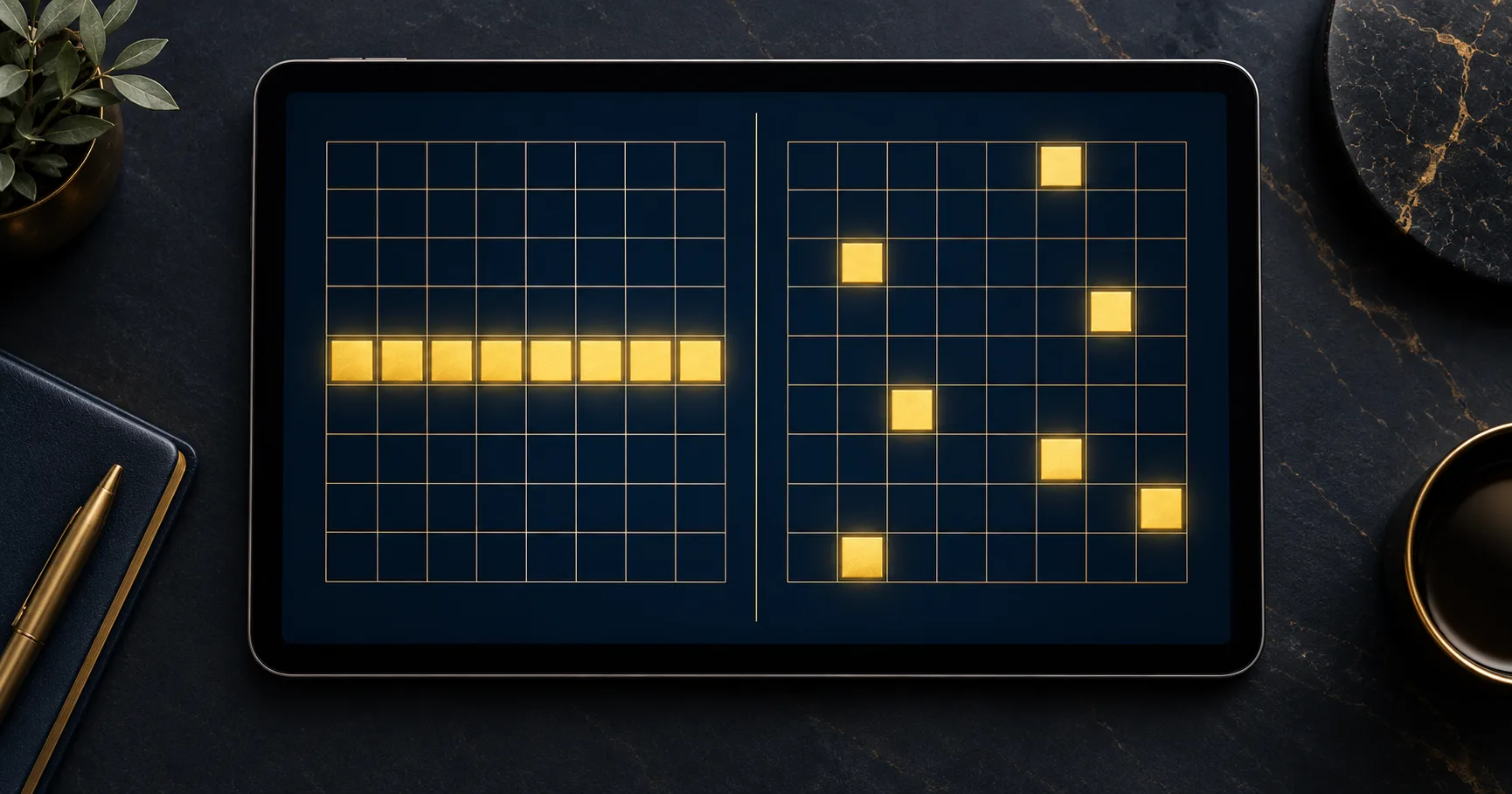
Consecutive numbers are not inherently worse than widely spaced numbers. A compact shape on the board is not more likely to succeed than an untidy one. Number spacing is a visual property of your ticket, not a signal about what a fair random draw will produce.
Birthday picks can make a ticket personal, but they do not improve its probability. Likewise, a number that has appeared frequently is not necessarily about to appear again, and a number absent for several rounds is not due. Independent draws do not compensate for previous results.
Keep the same numbers if you enjoy the routine, or change them if you prefer variety. Neither approach repairs a losing streak. The practical strategy is to stop treating ticket edits as a way to recover money. Read common keno myths before paying for any supposed number prediction system.
Split Your Session Budget Before Selecting Numbers
Choose a total entertainment budget in pesos before opening the ticket. Keep transport money, bills, food expenses and savings outside it. Then choose a fixed stake and a maximum number of paid rounds. The budget is a ceiling, not a target you need to spend.
For example, a ₱200 limit with a ₱10 stake covers at most 20 paid rounds if you do not recycle returns. This is budget arithmetic, not a suggested spending level. Check the game’s actual minimum stake and choose a smaller limit or skip play if the minimum feels uncomfortable.
- Set a loss limit and a finishing time before the first draw.
- Check the total ticket cost, including extra features and multiple draws.
- Keep the stake fixed instead of increasing it after losses.
- Track total spending and returns rather than individual celebrations.
- Stop when your money limit or time limit arrives, whichever comes first.
Faster rounds can make a modest stake expensive through repetition. If automatic play is available, understand its controls before using it; manual play may make each spending decision easier to notice. Consult setting gambling limits for practical ways to maintain boundaries.
Know When to Leave the Game
Take a break if you feel rushed, frustrated or determined to win back a particular amount. Avoid playing while drinking or when you cannot give spending decisions your attention. A session does not need to end with a winning ticket to be finished.
If staying within limits becomes difficult, stop depositing and use available account restrictions or self-exclusion tools. Ask someone you trust for support. Choosing different numbers cannot solve a spending problem, and another draw is not a reliable way to resolve a loss.
Recommended Platforms
Recommend a platform to yourself only after checking the exact keno game and its terms. A familiar name or attractive promotion cannot establish the quality of a particular payout table. Put clear game information, understandable costs and usable spending controls ahead of promotional claims.
When considering Lucky Fin Play, first check whether keno is currently available and whether its rules, stake limits and payout tables suit your intended session. Before depositing, look for the operator’s registered company name in the site footer and read the withdrawal conditions.
For play in the Philippines, check currency handling, payment charges, identity checks and any withdrawal limits that affect your budget. If a promotion interests you, verify keno eligibility, wagering requirements and contribution rates before opting in. Compare these details through comparing keno platforms.
The best practical choice is a game you understand at a stake you can comfortably lose. Select numbers for convenience or enjoyment, check the ticket once and stick to your limits. No platform, sequence or selection system can make a fair random draw predictable.