Tongits Draw Rules for Beginners: When to Take, Discard, or Call
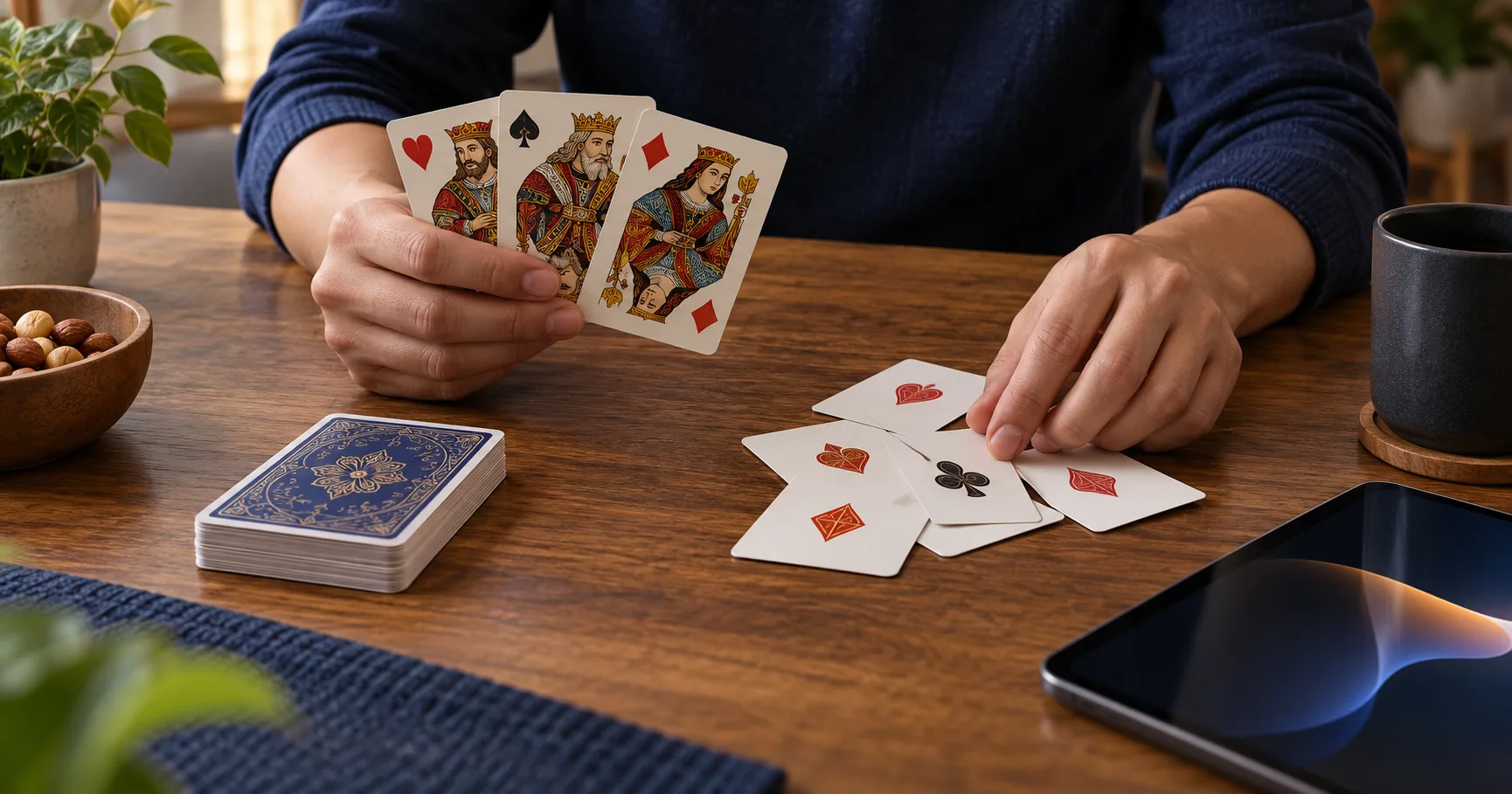
Game Overview
Understanding tongits draw rules for beginners starts with separating two actions: drawing a card during your turn and calling a draw to bring a hand to a comparison. They serve different purposes. Taking a card helps you improve your hand; a draw call asks the table to resolve the hand under its challenge rules. Confusing them can turn a manageable position into an avoidable loss.
Tongits is commonly played by three players with a standard deck. Players build combinations, reduce the value of unmatched cards, and watch what opponents take and discard. A hand can end when someone empties their hand, when a draw call is resolved, or when the stock runs out. The exact settlement and eligibility rules deserve a check before you join.
Follow the Turn Before Planning the Win
A useful beginner routine is to identify the card source, examine your combinations, and then choose a discard. Resist the urge to take a visible card simply because it looks useful. Picking up from the discard pile may require an immediate valid combination, depending on the table rules.
- Check whether you can take the visible discard and what you must do with it.
- If you draw from the stock, reassess your whole hand before committing to a combination.
- Lay down valid combinations or add cards to exposed combinations when permitted.
- Choose a legal discard that reduces your risk without unnecessarily helping an opponent.
A meld is a valid group, usually a set of matching ranks or a sequence in the same suit. Cards outside valid combinations create the points you are trying to reduce. Start with how to play Tongits if you need a walkthrough of dealing, turn order, and the basic winning conditions.
When a Draw Call Makes Sense
A draw call is a decision about your remaining points and your eligibility to make that call. A promising hand alone is not enough. Check whether an exposed meld is required, when a call is allowed, and whether recent additions to exposed combinations affect eligibility. Also check who may challenge and how a tie is settled.
Consider calling only after comparing your unmatched cards with the information visible on the table. An opponent who has exposed several cards may have very little left to count. An opponent holding many cards may still have concealed combinations. Neither hand size nor a quiet turn proves that your total is better.
Before playing for stakes, read the rules for an unchallenged call, a challenged call, and stock exhaustion separately. These situations can produce different outcomes. Use Tongits draw calls and challenges to organise those checks before your first session.
RTP + Volatility: Understand the Actual Risk
Do not treat Tongits as a slot with a fixed return-to-player percentage. A slot-style RTP figure is not a useful substitute for understanding a multiplayer card game's scoring, settlement, and charges. Your results depend on decisions, opponents, card distribution, and the format you enter.
Volatility is more useful here as a plain description of how sharply results can swing. A table with extra payments for particular outcomes can create larger losses than its headline stake suggests. Entry fees, deductions, and special settlement rules also affect what you keep after a winning hand.
- Check the full possible loss for one hand, including any additional payments.
- Identify entry charges or deductions before comparing tables.
- Read the settlement rules for a draw challenge and an exhausted stock.
- Choose a session limit that you can afford to lose without affecting essentials.
A smaller stake does not automatically mean a smaller total exposure if you play many hands quickly. Decide both a spending limit and a stopping time. Keep those limits unchanged after a loss. setting a gaming budget can help you turn a broad limit into a clear session boundary.
Symbol Guide: Read Cards and Table Cues
The symbols that matter in Tongits are card ranks, suits, and the table areas showing available information. There are no slot reels or bonus symbols to decode. Your immediate task is to distinguish a complete combination from a group that still needs another card.
- Rank identifies matching cards that may form a set.
- Suit identifies cards that may belong in the same suited sequence.
- The stock holds face-down cards available for drawing.
- The discard pile shows cards released during play, with access governed by the rules.
- Exposed melds show completed combinations and possible opportunities to add cards.
A set uses matching ranks across suits; a run uses consecutive ranks within one suit. A collection of cards sharing a suit is not automatically a run. Likewise, a pair is a potential set, not a completed combination. Check minimum combination sizes and how aces work before committing cards.
Confirm the scoring values shown in the game rules, especially for aces and court cards. A card's usefulness in a potential combination and its cost when left unmatched are different considerations. See Tongits melds and card values for a focused guide to reading your hand.
Strategy Tips: Make Each Turn Defensible
Balance Unmatched Points Against Useful Connections
Sort your hand into complete combinations, promising connections, and isolated cards. An isolated card with a high counting value is often a candidate for discarding, but do not make that decision mechanically. A card that completes an opponent's exposed combination may be expensive to release at the wrong moment.
Imagine choosing between a court card with no useful connection and a lower card that links two possible combinations. Keeping the connected card preserves options while shedding the isolated card may reduce your unmatched total. Reverse that preference if visible information makes the apparently useful connection unlikely to develop.
This is a tradeoff, not a guaranteed formula. beginner Tongits discard strategy can help you practise explaining each discard in terms of points, future combinations, and the information opponents can see.
Use Discards as Evidence, Not Certainty
When an opponent takes a discard, you gain information about a card they can use. When they pass on one, you learn less: they may have other priorities or face a rule restriction. Track visible choices without assuming you can reconstruct an entire hidden hand.
As the stock gets shorter, review whether a speculative combination still deserves space in your hand. Waiting for one exact card becomes less attractive when that card is visibly unavailable. Reassess your plan whenever a relevant card appears in a discard or an exposed meld.
Check Eligibility Before Calling or Challenging
Before calling a draw, check three things: your legal right to call, your count under the table's scoring rules, and the cost of losing the comparison. If one of those checks is unclear, open the rule panel before committing. A low-looking hand is not a substitute for an accurate count.
Apply the same discipline when challenging. Do not accept a challenge merely to recover an earlier loss or because the caller seems cautious. Compare your hand with the available evidence and the settlement terms. Practise these decisions through free Tongits practice games before attaching a money consequence to them.
Recommended Platforms: Choose by Rules and Practice Access
Start your platform selection with an accessible practice mode and a readable Tongits rule page. Check that the version you practise uses the same draw-call, challenge, and scoring rules as the version you intend to play. Familiar controls can hide meaningful differences between formats.
When exploring Lucky Fin Play, look for the Tongits game listing and open its rules before joining a table. Confirm whether the available format uses practice credits or real-money stakes. Treat any promotion as a separate decision: read its eligibility, expiry, and play conditions before opting in.
For any platform, check the registered company name, account requirements, payment terms, and available spending controls. Compare the full cost of play rather than choosing by a welcome offer alone. comparing Tongits platforms can help you organise those checks.
Choose a format whose rules you can explain back to yourself: where you may draw, what makes a meld, when you may call, and how the hand is settled. If playing for money, meet the applicable age and eligibility requirements and use only an affordable entertainment budget. A good first session is one in which you understand your decisions and stop at your planned limit.