Budgeting for Longer tongits Sessions Without Another Top-Up
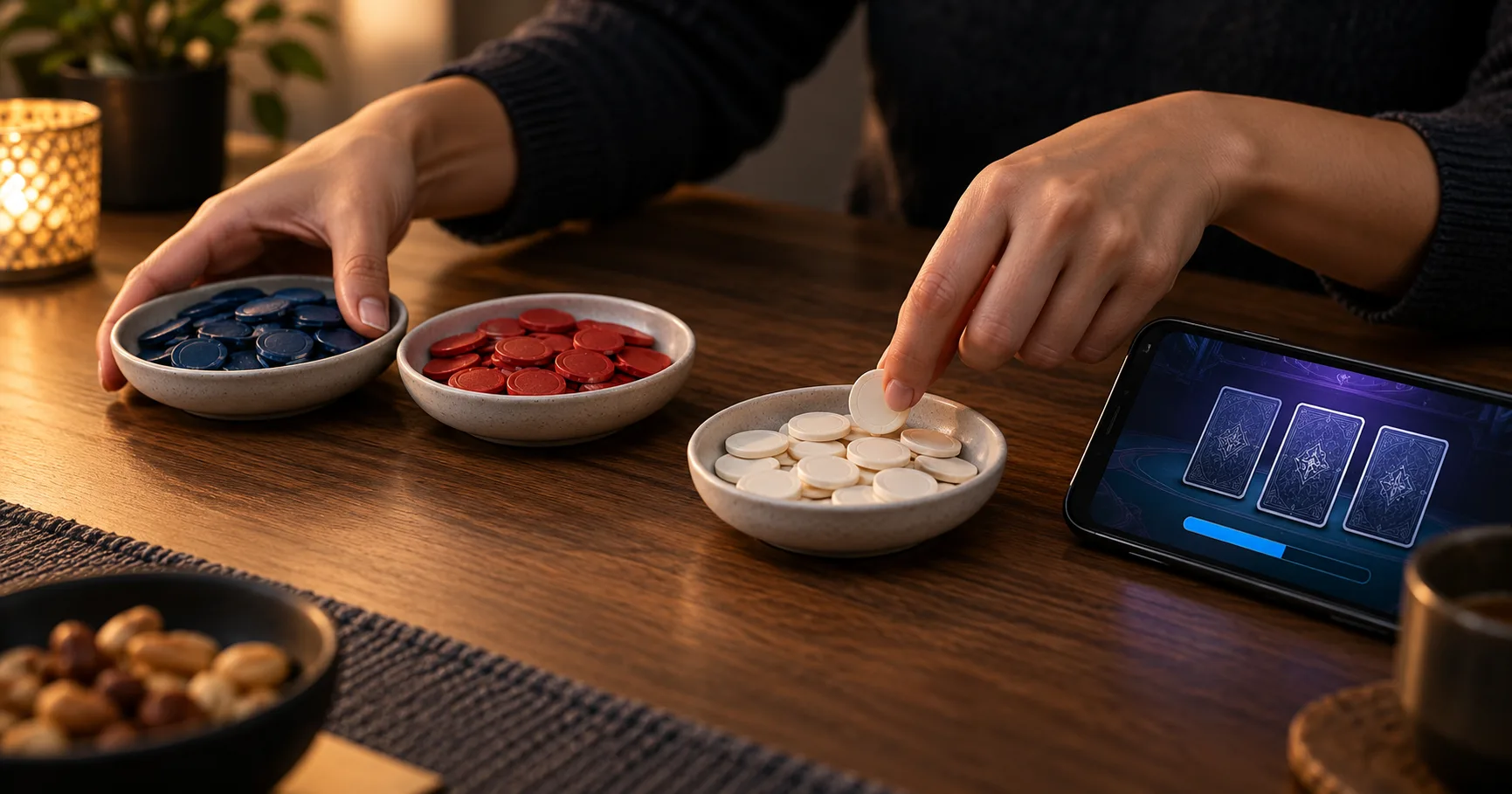
You settle in after Saturday dinner, open tongits on your phone, and notice your e-wallet also holds Monday’s fare and grocery money. The balance looks comfortable until you separate those commitments. For a longer session, that separation matters more than choosing an attractive starting stake.
A useful budget answers three questions before play begins: how much you can afford to lose, how much one round can cost, and when you will stop. These limits need to work together. A small stake alone cannot protect a budget if you keep playing or topping up indefinitely.
The peso amounts below are hypothetical planning examples, not recommended spending levels or terms of a particular game. Use smaller amounts, or skip paid play, whenever losing the allowance would affect ordinary expenses.
Who needs a separate allowance for each sitting?
This approach is for an adult weekend player who schedules a few longer sessions and uses real money. It is especially relevant when the same wallet pays for transport, food, mobile data and entertainment. Easy access to that wallet can make an unplanned deposit feel routine.
A player using free practice credits does not need a cash stake calculation unless spending becomes possible. A time limit still helps. Someone whose entertainment allowance is already exhausted should not treat a smaller stake as a reason to fund another session.
The allowance should also cover gambling across different games. If you switch from tongits to pusoy, money already lost still counts against the same spending limit. Changing games does not create another affordable allowance.
Allocate the weekend before funding Saturday
Say you have PHP 600 available for gambling after bills, savings and other commitments. You plan three sessions, so you allocate PHP 200 to each. That division creates separate limits rather than giving Saturday access to the whole weekend’s money.
Only make this allocation if losing all PHP 600 would be affordable. A bankroll is money exposed to loss, not money expected to return. During Christmas shopping season, money reserved for gifts or family travel belongs outside this calculation.
- Set aside essential spending and planned savings before choosing an entertainment allowance, including transport, meals, mobile data and upcoming family commitments.
- Choose a total gambling allowance for the weekend that you could lose completely without borrowing, delaying payments or moving money from savings.
- Divide that allowance among your planned sessions, keeping each later session’s portion separate from the amount available for the current sitting.
- Count any displayed funding charges within your spending allowance, so the combined payment and charge remain inside your chosen cash limit.
- Fund only the current session’s portion, and leave future allocations outside the playing balance wherever your payment arrangements allow that separation.
Under this example, losing Saturday’s PHP 200 ends Saturday’s paid play. Sunday’s allocation stays untouched even if friends remain online. Otherwise, the three-session plan quietly becomes one session with two extra deposits.
Translate the room’s stake into pesos at risk
Before calculating a round limit, read the room’s settlement rules. Identify what the displayed stake represents and whether any payment conditions can increase your loss. A visible entry amount is useful only when you understand the full cash exposure attached to playing.
For a hypothetical PHP 200 session, suppose you choose PHP 5 as your maximum affordable loss per round. That equals 2.5% of the starting session allowance. It is a planning choice, not a proven safe percentage or a way to improve your chance of winning.
- Check whether the displayed amount represents an entry payment, a base stake or the full amount that can leave your balance.
- Read every settlement condition that could increase a losing payment, and calculate the largest applicable loss before selecting the room.
- Check whether charges are included in the displayed amount or deducted separately, then include applicable deductions in your round exposure.
- Compare the calculated exposure with your chosen peso limit, and skip the room if its minimum commitment exceeds that limit.
- Use a room only when its rules make the cash exposure clear enough to calculate; unresolved payment conditions are a reason to pause.
If a hypothetical room shows PHP 5 but its rules permit a PHP 15 losing settlement, it exceeds your PHP 5 limit. The smaller label does not change that calculation. Look for an affordable alternative or use free practice instead.
Keep the peso ceiling fixed throughout the sitting. A larger balance after a win does not require a larger stake, and a smaller balance after losses does not justify chasing recovery.
Test whether the budget fits a longer evening
Dividing PHP 200 by PHP 5 gives 40 maximum-sized losing rounds, assuming each costs exactly PHP 5 with no additional deductions. This is a stress test, not a prediction. Actual results and settlement amounts can change the balance path.
Now suppose you want a two-hour sitting and observe roughly 30 completed rounds per hour in your chosen room. That would create about 60 opportunities to risk money. At PHP 5 each, 60 full losses would cost PHP 300, exceeding the session allowance.
The mismatch does not mean you should increase the budget. It means the desired playing time and affordable exposure do not fit that stress test. Paid play cannot guarantee two hours of entertainment from a fixed balance.
- Reduce the maximum round exposure if an available room genuinely supports a smaller total loss under its stated settlement rules.
- Accept a shorter paid session when the affordable allowance runs out before your planned finishing time, without adding another deposit.
- Include breaks away from paid play, remembering that a break only reduces exposure when you actually enter fewer paid rounds.
- Continue with free practice after reaching the cash limit, provided the mode does not require purchases or paid entries to continue.
Suppose an affordable room instead allows a maximum PHP 2 loss per round. Sixty such losses would total PHP 120 before any separate costs. That arithmetic offers more room within PHP 200, but it does not establish the room’s availability or predict results.
Make the stopping decision before the first round
A stop rule works best when it names an action rather than a feeling. For this example, stop paid play when the PHP 200 allocation is exhausted or at your chosen finishing time, whichever comes first. Never add funds during the sitting.
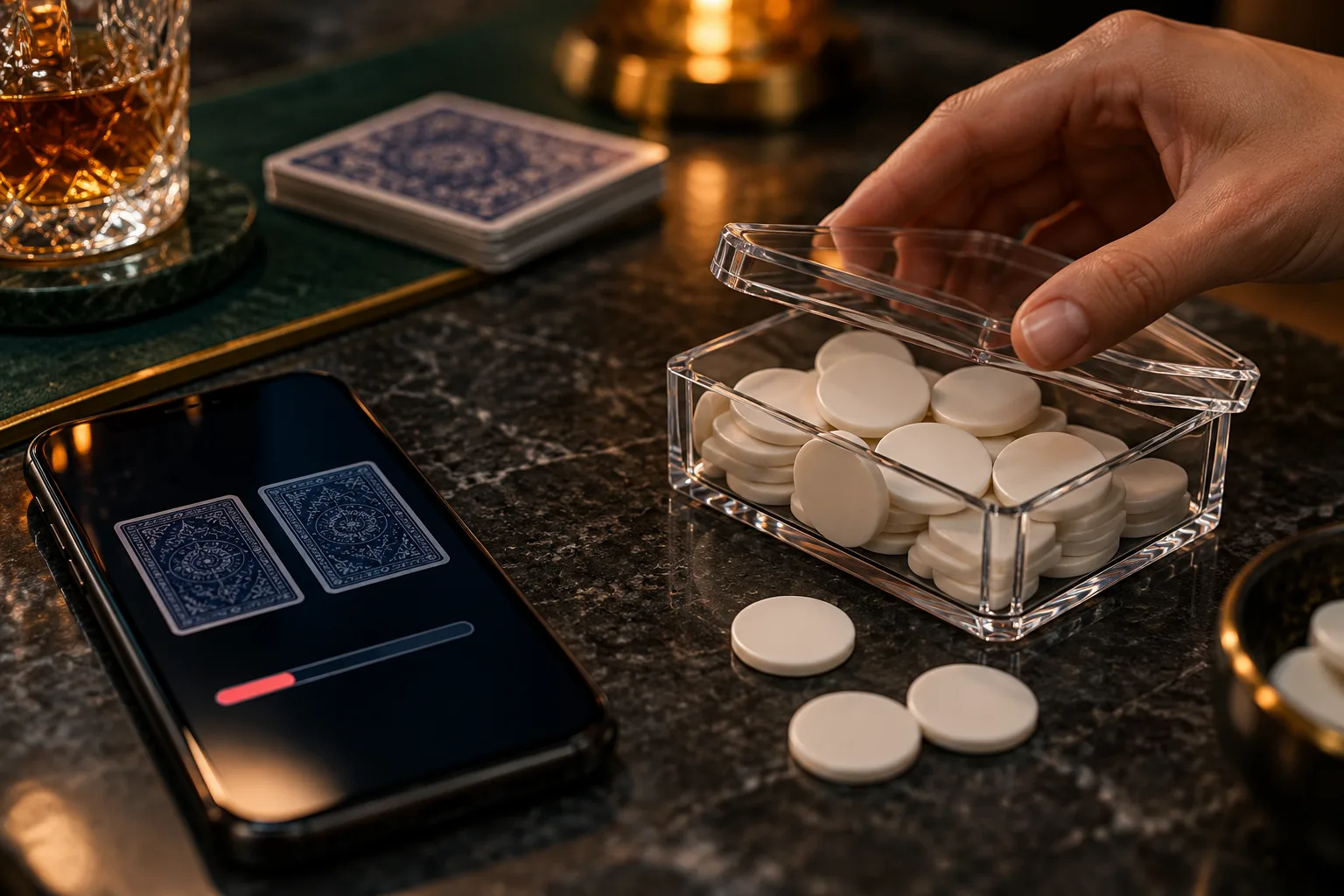
You can also choose a lower loss limit within the allocation. Starting at PHP 200 and setting a PHP 120 net-loss limit creates a PHP 80 balance floor. Before every new round, check whether its maximum loss could take you below that floor.
- Write down the starting balance, the optional balance floor and the finishing time before entering the first paid round of the session.
- Check the remaining balance before each entry, and decline a round whose maximum loss could cross your chosen balance floor.
- Set a reminder before the finishing time, then stop entering rounds early enough to respect the room’s rules for completing active play.
- End paid play when either boundary arrives, keeping any remaining balance out of further rounds rather than spending it merely because it remains.
- Record the closing balance and any withdrawals, and keep the next session’s allocation unchanged instead of increasing it to recover today’s losses.
For example, at PHP 83 with an PHP 80 floor, a round that could lose PHP 5 is already too expensive. Stop before entering it. Waiting until the balance crosses the floor would turn the limit into an after-the-fact observation.
Keep payment trouble outside the playing decision
A pending e-wallet transfer or interrupted connection should trigger a pause, not another payment. If a deposit does not appear, compare the wallet record with the account’s transaction history. Retain the reference and use the operator’s support process before attempting a replacement.
The same principle applies after a mobile-data interruption during play. Check the round record and resulting balance before entering again. Do not assume a frozen screen means the round was cancelled or that the stake returned.
At the end of the weekend, compare actual spending with the original PHP 600 ceiling, including any applicable charges. If the plan repeatedly feels too restrictive, shorten paid sessions or use free play. A workable tongits budget leaves everyday money available after the phone is put away.