Wheel Free Play Briefing: What Demo Results Really Mean
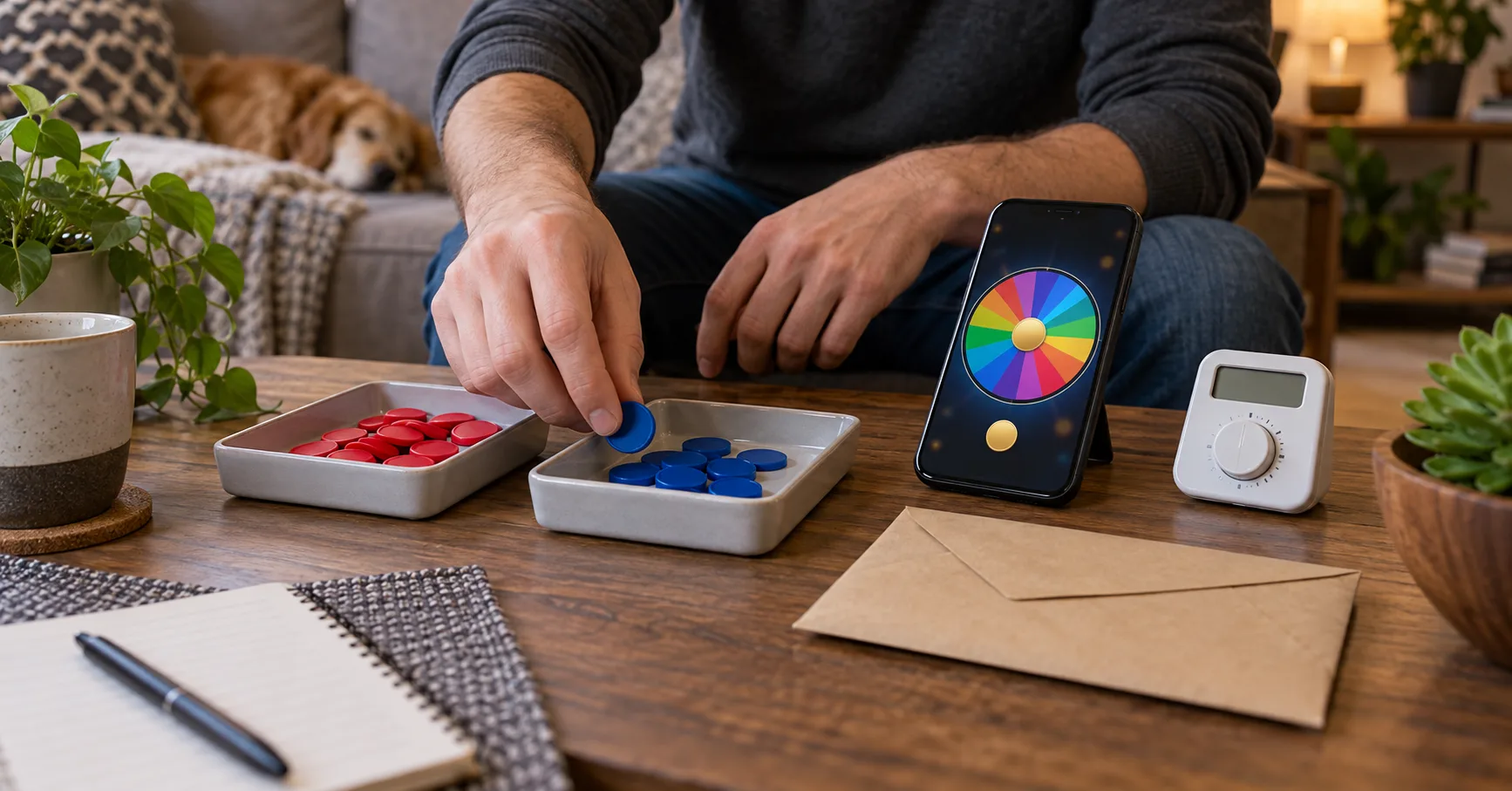
The first difference a Philippine weekend player will notice is simple: a Wheel demo can keep running after a bad sequence because the displayed credits are not household money. That freedom makes practice useful, but it also removes the pressure that changes real decisions. A strong demo session therefore proves that the interface works for you. It does not prove that the next cash session will finish ahead.
Lucky Fin Play treats free play as a testing environment rather than a prediction engine. The practical question is not whether the demo balance rose. It is whether you learned enough to set a real-money stake, session limit, connection check, and stopping point before Saturday evening.
The Bulacan report changes preparation, not Wheel mathematics
EVENT: On September 21, 2026, sectoral groups rallied in Bulacan over alleged corruption amid persistent flooding. The event was reported by GMA News in “LOOK: Sectoral groups rally in Bulacan, decry corruption amid persistent flooding.” The supplied report identifies the rally and flooding concern, but it does not establish any Wheel outage, payment failure, or operator policy change.
IMPACT AND READER ACTION: Persistent flooding can still matter operationally if it affects a player’s route to a payment centre, mobile-data stability, or ability to concentrate at home. Before loading PHP 500 through GCash, Maya, or an available payment counter, check the local connection and avoid starting during an uncertain interruption. Keep cash untouched when the only evidence is a delayed screen. As of September 21, 2026; treat this advisory context as current only through September 28, 2026.
Read the free-play label as a limited promise
A “demo,” “practice,” or “play for free” notice generally tells you that the current balance is not your deposited cash. It does not automatically tell you whether every setting matches cash play. Available stakes, round speed, special segments, or account features may differ by game and platform.
The announcement also says nothing about future returns. Twenty winning rounds can occur inside a losing sequence, while 20 quiet rounds can appear before a strong result. Neither pattern becomes a schedule. Random outcomes do not owe the player a correction because a previous run looked unusually weak or unusually generous.
Before treating a demo as evidence, verify exactly what the screen lets you observe:
Confirm whether the practice balance is clearly separated from deposits, withdrawable funds, and any Free Credits attached to an account.
Check whether the demo offers the same visible stake choices you expect to consider during a PHP 300, PHP 500, or PHP 1,000 session.
Observe whether the result remains visible long enough to record the stake, winning segment, credited amount, and updated balance accurately.
Test whether an interrupted mobile-data connection produces a pending animation, a restored result, or an unclear state requiring later verification.
Note whether faster play encourages immediate repeats, because speed changes session cost even when each individual stake remains unchanged.
What practice can answer before Saturday night
Demo mode is valuable for questions about behaviour and usability. A weekend player who schedules two longer sessions can learn whether the wheel animation feels slow after 30 minutes, whether controls are easy to mis-tap, and whether the result history is understandable on a small phone.
It can also expose an unsuitable stake ladder. Suppose a hypothetical demo offers PHP-equivalent choices of 5, 10, 20, and 50 credits. A player planning a PHP 500 cash budget can compare how quickly 100 rounds at 5 units feels against only 10 rounds at 50 units. This comparison measures exposure, not expected profit.
Practice is especially useful for rehearsing pauses. If a player intends to stop after 40 rounds, the demo can reveal whether that boundary feels natural or whether the interface encourages another spin. The discovery is behavioural. It remains useful even when the demo finishes with an unusually high balance.
Where a practice balance gives the wrong impression
Free credits reduce emotional weight. Losing 200 practice units may feel like an interesting pattern, while losing PHP 200 can trigger frustration, faster tapping, or an attempt to recover the amount. Demo discipline must therefore be judged by actions, not by calm feelings alone.
A short result history also creates false confidence. Imagine that 100 demo rounds begin at 1,000 credits and end at 1,180. The gain is 180 credits, or 18% of the starting practice balance. That calculation accurately describes the sample. It does not establish the game’s long-term return, a repeatable edge, or the outcome of the next 100 rounds.
The reverse mistake is equally costly. If another 100-round sample falls from 1,000 credits to 760, the 240-credit decline does not prove that cash play is “due” to recover. The two samples are observations, not forecasts. Increasing the first real stake from PHP 5 to PHP 50 would multiply exposure by 10 without improving the evidence.
Promotional value creates another boundary. A demo balance is not automatically governed by the same conditions as a Bonus. Cash conversion, eligible games, accepted wagers, and withdrawal conditions belong to the relevant offer terms. Do not infer those rules from practice credits.
Convert observations into a cash-session plan
The safest translation keeps what the demo measured and discards what it could not measure. Preserve the comfortable stake, readable pace, and tested stop rule. Discard the final balance as a promise.
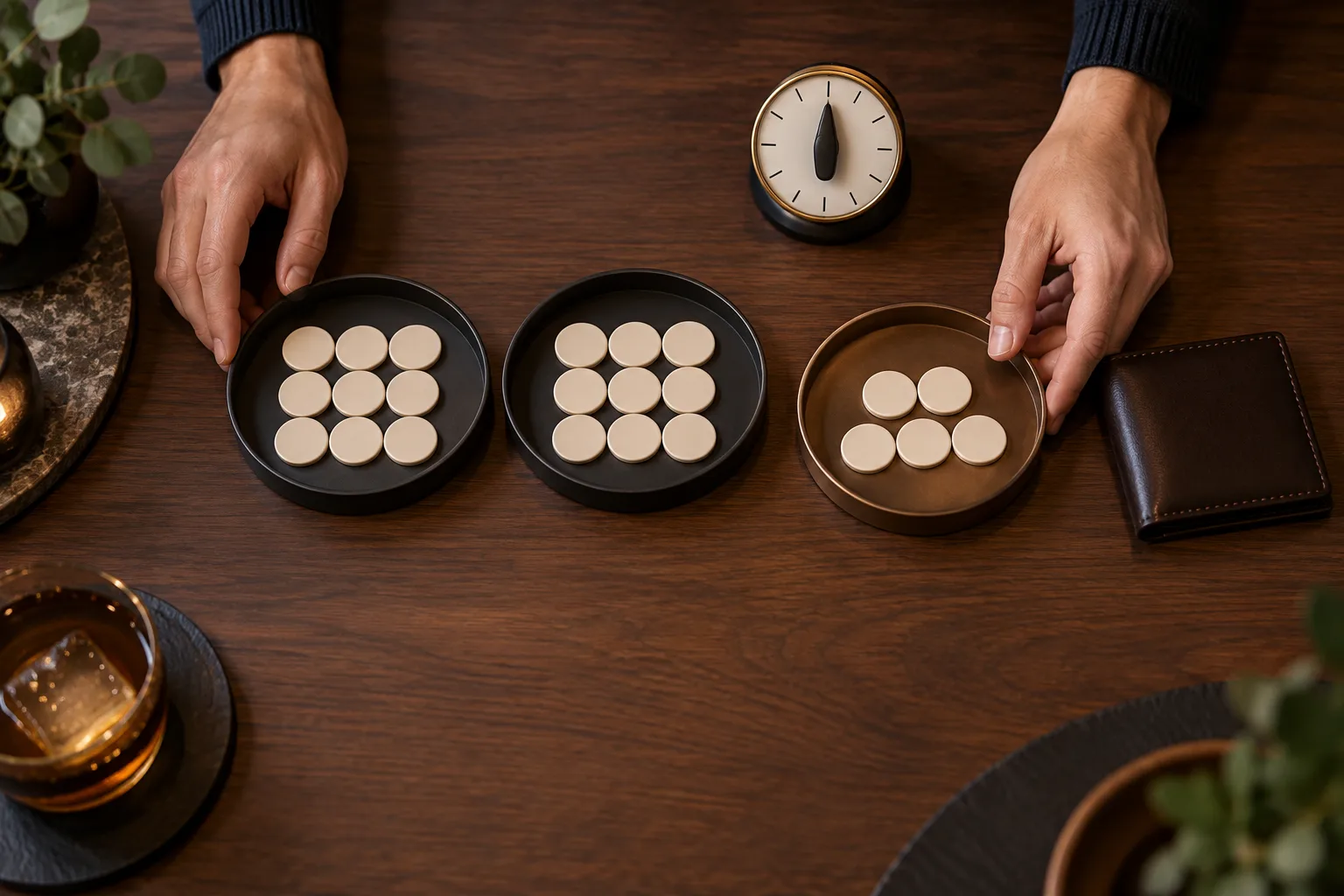
Choose one hypothetical cash budget, such as PHP 500, and keep emergency funds, fare, food, and Christmas-season spending outside that amount.
Select a base stake tested in demo, such as PHP 5, which represents 1% of the PHP 500 starting session budget.
Set a round ceiling, such as 60 rounds, because PHP 5 multiplied by 60 creates PHP 300 of planned initial exposure.
Add a time boundary, such as 45 minutes, so slow play cannot silently turn one Saturday session into an open-ended evening.
Define one stopping trigger, such as a PHP 200 loss or two connection disputes, before opening GCash, Maya, or the game screen.
Record the closing cash balance separately from demo results and promotional balances, then review the decision quality on Sunday.
These figures are illustrative, not Lucky Fin Play terms or a recommendation to spend PHP 500. A player can replace them with PHP 200 and PHP 2, or decide that no cash session fits the week. The method matters more than the amount.
A worked translation from 200 practice rounds
Consider a labelled hypothetical test. A player completes 200 demo rounds across Friday and Saturday, using 5 practice units for the first 150 rounds and 10 units for the last 50. The ending balance is ignored because it cannot predict Sunday’s result.
The player instead learns three concrete facts. At 10 units, the balance changes feel distracting. After roughly 50 consecutive rounds, attention drops. On mobile data, one animation appears delayed, but the result later remains visible in history. Those observations support a smaller stake, a shorter block, and a verification pause after any interruption.
For a hypothetical PHP 500 cash session, the player chooses PHP 5 per round and divides play into two blocks of 30 rounds. Maximum planned stakes across 60 rounds equal PHP 300, although wins during the sequence can change the displayed balance. The player also holds PHP 200 outside the round plan instead of treating it as recovery ammunition.
If the first block ends down PHP 120, the second block is not automatically justified. The player takes a 10-minute break, checks the remaining cash balance, and decides whether the original entertainment budget still feels acceptable. This decision rule comes from the demo’s attention test, not its winning or losing sequence.
Mobile checks before committing deposited money
Longer weekend sessions create more opportunities for battery drain, signal changes, and interruptions. A Wheel demo can reproduce some interface conditions, but it cannot prove that a later GCash or Maya transaction will succeed. Payment confirmation must come from the actual balance and transaction records available at the time.
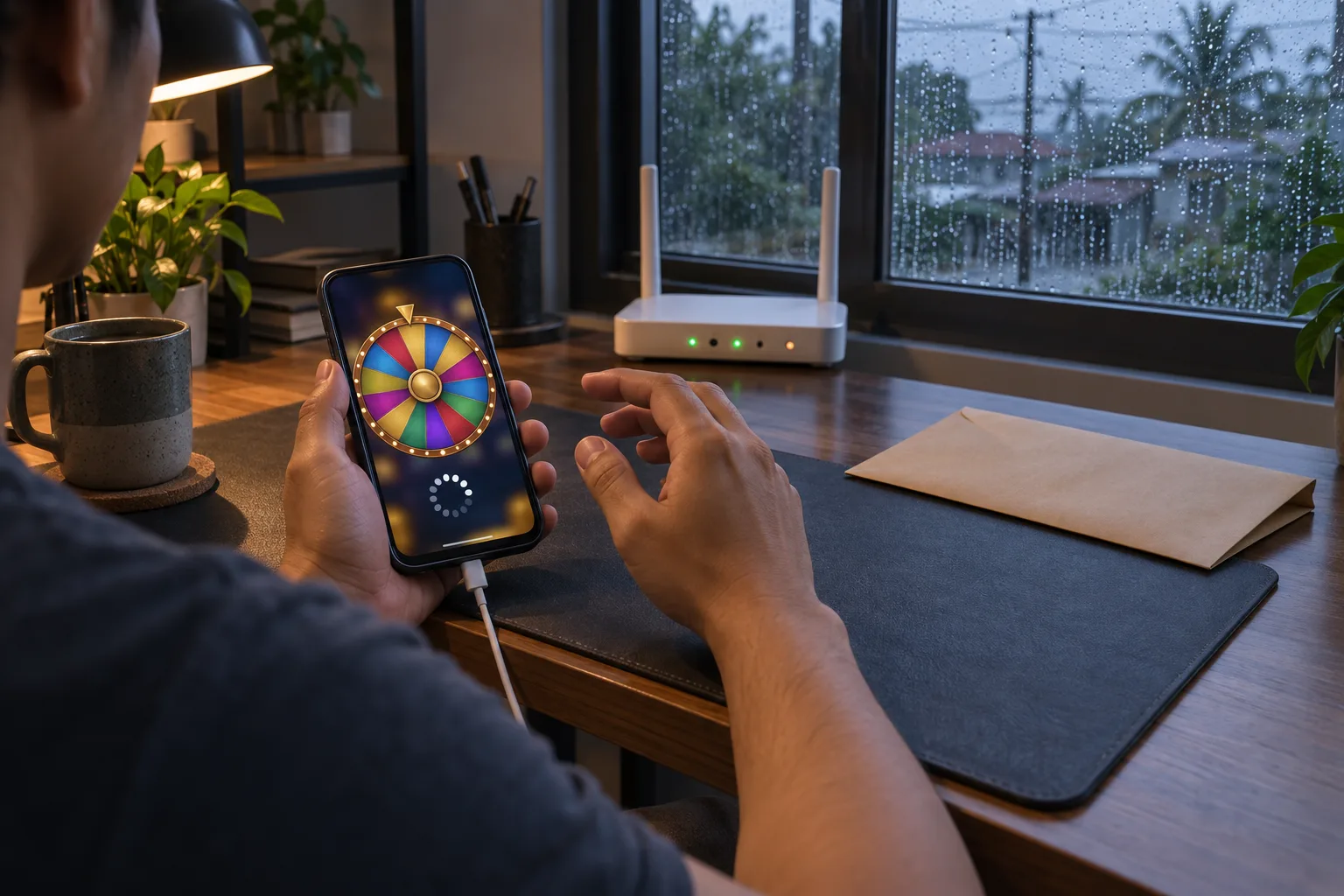
Complete this short readiness check before switching from practice:
Charge the phone above a personally chosen threshold, such as 60%, and keep the charging cable away from wet surfaces or crowded walkways.
Test one minute of ordinary browsing on the intended Wi-Fi or mobile-data connection before relying on a smooth demo animation.
Close unnecessary video streams and downloads, because competing traffic can make a visual result appear slower without changing the settled outcome.
Verify the selected stake before every resumed block, particularly after rotating the screen, answering a call, or returning from a payment app.
Pause after any uncertain result and inspect available history or balance evidence instead of paying again to investigate the first round.
Players using payment centres should also consider opening hours and travel conditions before leaving home. During the Philippine “-ber months,” weekend errands and Christmas shopping can already compress the available session window. A rushed cash-in is a poor reason to extend play past a planned stop.
The useful verdict is about control
A successful Wheel demo does not end with the largest practice balance. It ends with a written decision: the interface is comfortable, the stake is manageable, the connection is adequate, and the stopping rule survived a realistic trial. Any missing answer is a reason for another free test, not a reason to deposit quickly.
For a player with only two longer sessions each week, the translation should remain conservative. Keep the demo’s lessons about pace and attention, but reset expectations about outcomes. If PHP 5 already feels meaningful with cash, the correct stake is not the demo stake that produced the best run. It is the amount that preserves the weekend boundary when the wheel lands badly.